
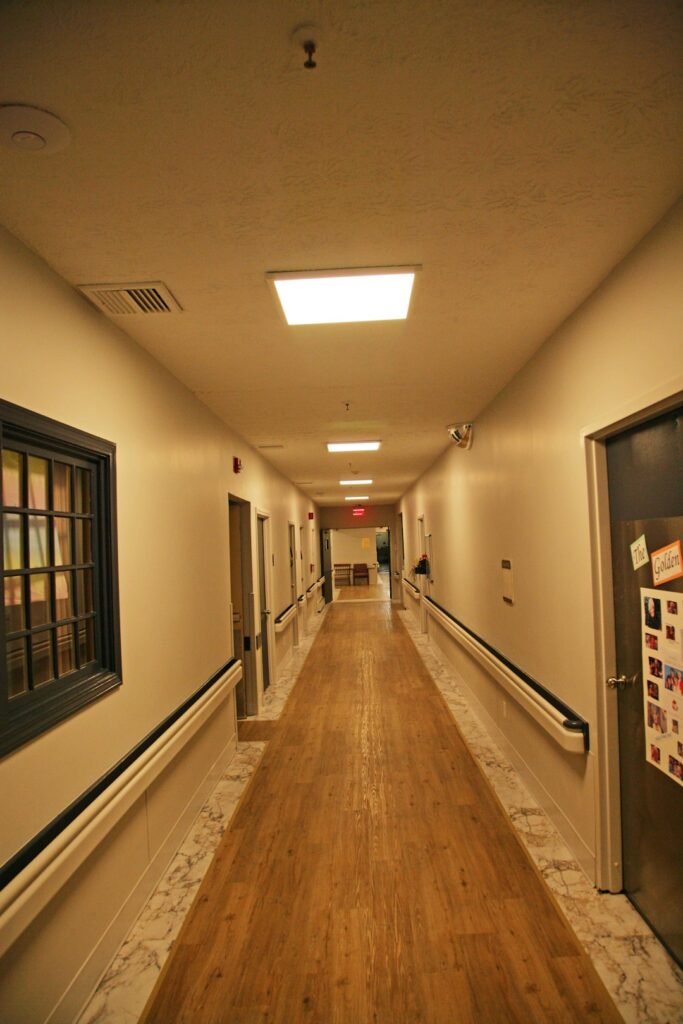
What adaptations help seniors with visual impairments in assisted living?
The most useful adaptations combine better lighting, reduced glare, strong color contrast, clear pathways, tactile cues, and consistent routines. The goal is not simply to make a building look brighter. It is to help a resident locate important objects, move safely, recognize staff and surroundings, and continue daily activities with as much independence as possible.
Vision loss affects people differently. Someone with macular degeneration may have difficulty seeing faces or reading small print, while glaucoma can reduce peripheral vision. Cataracts may cause blurred vision and glare, and diabetic eye disease can affect clarity or contrast. Assisted living adaptations should therefore be based on the resident’s actual abilities rather than on a single standard setup.
In Pennsylvania, assisted living residences are licensed settings with requirements related to resident safety, emergency notification, physical conditions, and care planning. Practical adaptations should be reviewed as part of the resident’s changing needs.
How should lighting be adjusted?
Lighting should be bright enough for safe movement and close-up tasks, but it should not create glare. Uneven lighting can be especially difficult because the eyes must repeatedly adjust when moving from a bright area into a dim hallway or room.
Helpful approaches include:
- Using even lighting in hallways, bedrooms, bathrooms, dining areas, and activity rooms
- Adding task lighting for reading, medication organization, crafts, grooming, or meal preparation
- Aiming lamps toward the work surface instead of directly toward the resident’s eyes
- Replacing burned-out bulbs promptly
- Using shades, blinds, or curtains to control sunlight through windows
- Checking for reflections from mirrors, polished floors, glass doors, and shiny countertops
A bedside lamp, bathroom night-light, or motion-activated light can help with nighttime travel. The light should make the route visible without producing a sharp contrast between a bright fixture and a dark surrounding area.
Seasonal changes can also affect comfort. In a place with snowy winters and bright outdoor reflections, glare from windows may be more noticeable. Window coverings should be easy to adjust, and outdoor walkways should be checked for changing shadows, ice, and uneven surfaces.
Why are color contrast and tactile markings important?
Color contrast helps a resident distinguish one object from another. A white light switch on a white wall may be difficult to find, while a dark switch plate against a light wall is easier to locate. A dark toilet seat, towel, or bath mat may stand out more clearly against a light bathroom.
Useful examples include:
- Contrasting door frames and doors
- High-contrast tape along stair edges and ramps
- Light-colored dishes on a darker table surface
- Dark handrails against light walls
- Contrasting grab bars in bathrooms
- Bright or textured covers on frequently used controls
- Tactile markings on appliance buttons or room controls
Contrast should be clear rather than decorative. Busy patterns on carpets, upholstery, and wallpaper can make surfaces appear uneven or confusing. Plain, nonglossy finishes are often easier to interpret.
Tactile cues are particularly valuable for residents who have limited usable vision. Raised dots, textured labels, braille signage where appropriate, and familiar object placement can support recognition without relying on sight alone.
How can hallways and resident rooms be made safer?
Clear, predictable pathways are among the most important adaptations. Furniture should not be placed in walking routes, and changes to the room layout should be explained before they occur. A chair, table, or wastebasket that is moved without warning can become a fall hazard.
A safer layout generally includes:
- A direct route between the bed, bathroom, doorway, and main seating area
- Electrical cords kept out of walking paths
- Securely fitted rugs or no loose rugs at all
- Nonslip, low-glare flooring
- Clear thresholds between rooms
- Furniture with enough contrast to stand out from floors and walls
- Frequently used items kept in consistent locations
Staff should describe the location of objects rather than pointing vaguely. “Your water is on the table to your right” is more useful than “It is over there.” If a resident uses a cane, walker, or other mobility aid, the device should be placed where it can be reached safely from the bed or chair.
Room numbers and directional signs should use large, high-contrast lettering and be placed at a consistent height. Residents who are blind or have very limited vision may also benefit from tactile or braille identification.
What bathroom adaptations are most helpful?
Bathrooms require particular attention because water, glare, hard surfaces, and tight spaces increase fall risk. Grab bars, handrails, and assist bars should be secure and positioned according to the resident’s needs. Showers and tubs should have slip-resistant surfaces, and bath mats should not slide or curl at the edges.
Other helpful changes include:
- Contrasting fixtures against the wall or floor
- Clearly marked hot and cold controls
- Even lighting that reduces mirror glare
- A contrasting toilet seat or grab bar
- Toiletries kept in consistent locations
- A night-light between the bed and bathroom
- A call system that is easy to locate by sight or touch

An all-white bathroom may appear clean but can be difficult to navigate because fixtures blend together and bright surfaces reflect light. Strategic contrast often improves both safety and orientation.
How can meals, medications, and activities remain accessible?
Vision loss should not automatically remove a resident from group activities or self-directed routines. Staff can support participation by providing large-print menus, reading information aloud when requested, describing food placement, and using high-contrast plates and cups.
For meals, the “clock method” can help: food may be described as being at 12 o’clock, 3 o’clock, 6 o’clock, or 9 o’clock on the plate. Staff should ask whether the resident prefers assistance rather than assuming it is needed.
Medication routines require individualized safeguards. Large-print labels, tactile organization systems, audio reminders, and direct assistance may be appropriate, but medication changes should follow the resident’s care plan and clinical instructions. Similar-looking containers should not be stored together if doing so could cause confusion.
Activities can be adapted through:
- Audio books and spoken instructions
- Large-print games and crafts
- Tactile art materials
- Music, exercise, discussion groups, and hands-on activities
- Verbal descriptions of demonstrations or visual presentations
- Seating arrangements that reduce glare and improve access to the speaker
What should families ask before a move?
Families can ask how the residence assesses visual needs during admission and after a change in eyesight. Useful questions include:
- Are rooms and furniture kept consistent when possible?
- How are emergency exits, elevators, and stairways identified?
- Are menus, schedules, notices, and activity calendars available in accessible formats?
- Can staff provide verbal directions and orientation to unfamiliar areas?
- How are call buttons and emergency notification systems adapted?
- What happens if a resident’s vision changes suddenly?
- Are lighting, glare, bathroom safety, and walking routes reviewed in the resident’s care plan?
A visit at different times of day can reveal problems that are not obvious during a bright midday tour. Families may want to observe evening lighting, hallway shadows, bathroom visibility, and the transition from indoor areas to outdoor walkways.
When is a vision rehabilitation evaluation useful?
An eye examination can identify treatable conditions, but ordinary glasses do not correct every type of low vision. Vision rehabilitation may help a resident learn safer ways to read, organize belongings, use technology, travel through familiar spaces, and complete personal tasks.
The most effective plan is usually collaborative. The resident’s preferences, eye condition, mobility, hearing, memory, and daily routines should all be considered. Adaptations should be reassessed after a fall, hospitalization, medication change, new eye diagnosis, or noticeable decline in confidence.
A well-adapted setting does more than reduce hazards. It gives residents reliable visual and tactile information, supports familiar routines, and makes it easier to participate in daily life without unnecessary dependence.
